
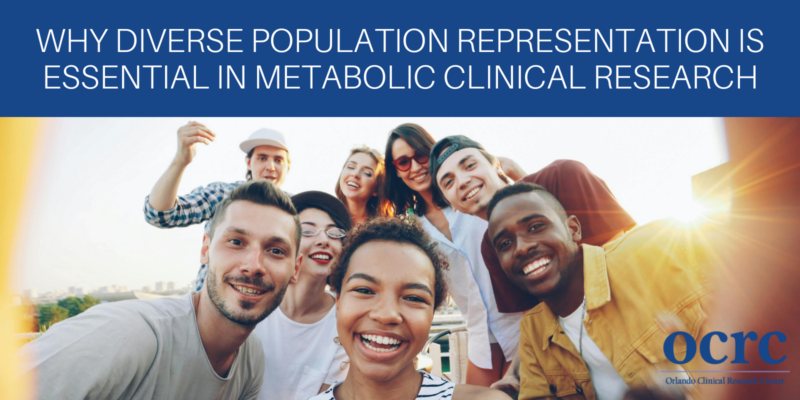
Metabolic clinical research centers on how the body converts food into energy, processes nutrients, and regulates biochemical pathways. It looks at how metabolic processes can go wrong and lead to conditions like type 2 diabetes, obesity, and cardiovascular disease, while also seeking out new treatments and prevention strategies.
Diversity is one of the many factors that can play a role in metabolic clinical research. Environment, genetics, and lifestyle can affect the risk of developing certain metabolic conditions, so having a wide range of participants in studies can make a critical difference in their outcomes and the quality of the science as a whole.
People from diverse ethnic backgrounds can process nutrients and medications differently because of genetic variations.
Studies involving cardiovascular medications have shown just how significant this impact can be. For example, people with certain genetic profiles can experience differences in the blood-pressure-lowering effects of ACE inhibitors and β-blockers.
An individual’s genetic makeup can also affect how well their liver breaks down different substances.
Enzymes in the liver are broadly responsible for metabolizing medications, but genes determine how active these enzymes are. Some populations have variants that make them poor metabolizers, while others are ultra-rapid metabolizers, which may not allow the drug to work as needed.
When a clinical trial includes a diverse group of participants, it can be easier to predict how a given medication will function. Researchers can then make adjustments to ensure that the largest number of people can benefit from the drug.
Metabolic disorders (especially type 2 diabetes and hypertension) frequently impact ethnic minorities at higher rates.
This can happen as a result of genetic as well as economic and environmental factors. For instance, certain populations, like South Asian and Hispanic communities, have higher baselines of insulin resistance, and many ethnic groups store body fat differently.
Economic status can also impact the risk of suffering from various diseases. People in disadvantaged communities may have fewer opportunities to eat well-balanced meals or may not have sufficient time for or access to recreational physical activities.
Healthcare access can be an issue as well. In some cases, there may be disparities in coverage that prevent people in certain communities from seeking medical assistance. Language or cultural barriers can also mean delayed diagnoses.
With a commitment to more diverse research studies, diagnostic procedures can be made easier and faster, and treatments can take into account the numerous socioeconomic factors affecting those who suffer most from metabolic conditions.
Having a large and diverse group of research participants can make a medication or treatment safer for everyone. Conversely, a lack of diversity can result in potential adverse effects being overlooked. If research participants are limited to a single ethnic or economic background, real-world applications of drugs or treatments could be less effective than desired.
Diversity makes it possible to account for genetic and environmental differences across population groups, ensuring that interventions are safe for everyone who needs them.
Many agencies, such as the FDA, increasingly look for research that includes people of all backgrounds. They may not provide research funding if certain parameters aren’t met, which could derail a study.
Although there are still no strict regulations regarding participant diversity, it’s becoming an issue that regulatory agencies look at more closely.
Unfortunately, many of the communities that are most affected by metabolic diseases have the least trust in medical research. Sometimes, they’ve been misled or not provided with the quality of care they deserve, so their mistrust is understandable.
Showing that the research for a particular drug or treatment included people from diverse backgrounds can foster trust between minority groups and the medical establishment. This trust, in turn, can increase patient confidence, promote compliance with treatments, and improve patient outcomes.
At Orlando Clinical Research Center, our state-of-the-art facilities can host Phase I–IV clinical trials for metabolic research. We are proud to conduct ongoing clinical trials exploring how the body metabolizes innovative liver and kidney therapies.
Contact us today to learn more about our current studies or schedule a consultation with our team about sponsorship opportunities in our custom built 35,000 sq. ft. clinical research center.
This article is part of the Clinical Trial Participation & Innovation series. Click here for info.
